Lists of Rules
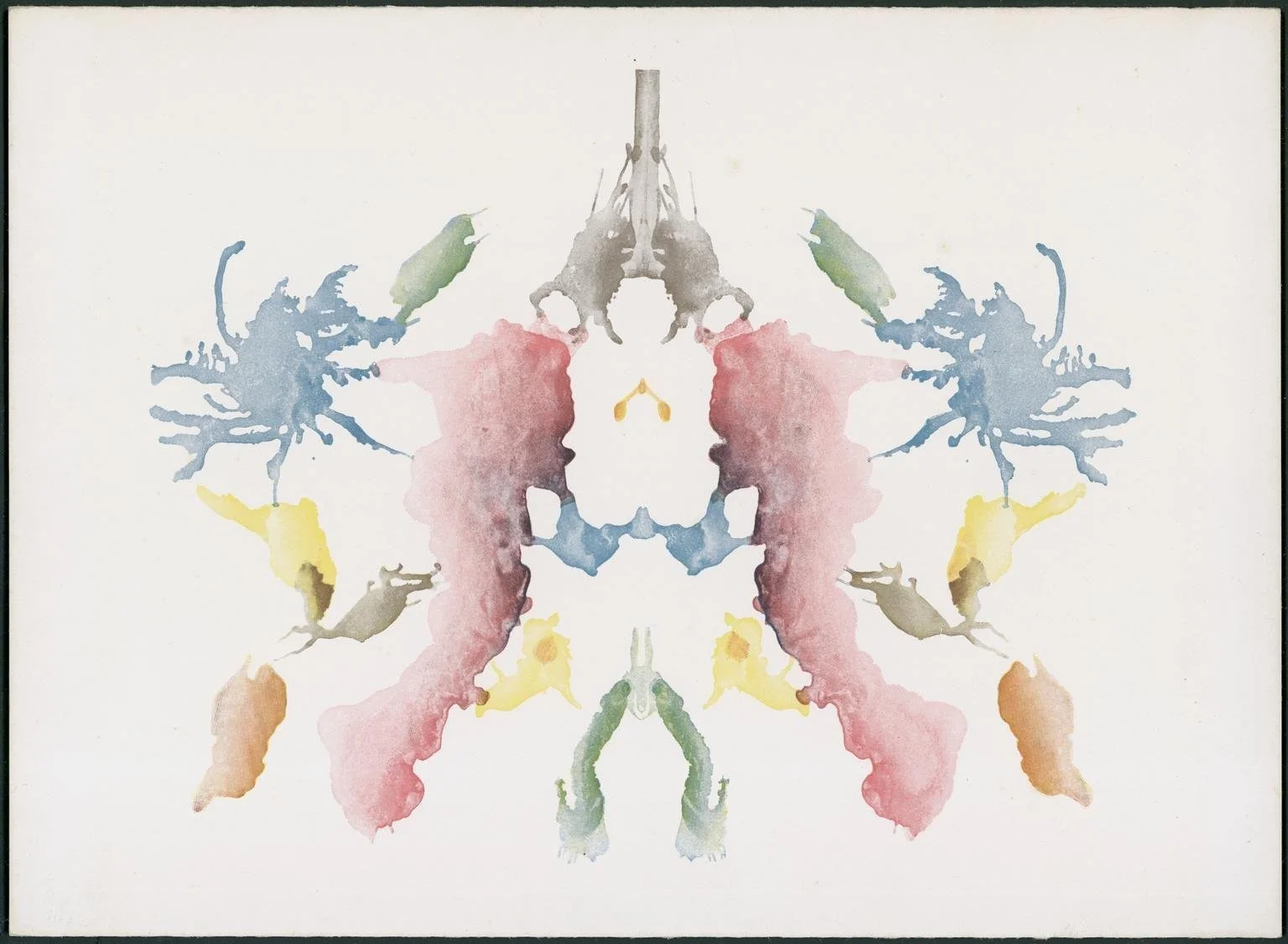
Hermann Rorschach, Rorschach Inkblot Test, Bern Switzerland, 1942, Science Museum Group Collection, Open: Science Museum Group, Artstor, https://jstor.org/stable/community.38358143.
What’s more satisfying than a list? A list of lists! What’s more fun than a list of lists? A list of lists of rules!
Writing rules are like horoscopes or Tarot cards or dream interpretation or personality tests: they’re fun, interesting, diverting, and sometimes inspiring, but they aren’t universal, objective, scientifically proven, or mandatory. Take what works and fling the rest!
These lists are a small fraction of the “writing rules” floating around. To explore more, Maria Popova’s Writers on Writing collection at The Marginalian is a good next step.
Rules for Writing
Themes & Favorites
Themes
Customization: Make up your own rules, change existing rules to suit you better, and/or pick from other writers’ rules.
Typers typing: There can be major benefits to regularity and consistency in writing, if that’s possible with your other responsibilities.
Internet hate: Franzen and Smith both talk about the Internet having a negative impact on writing. King has two rules about not writing with the TV on. If I hunted down and read the entire text of where all of these rules are drawn from (which I haven’t done), I might find that the explanation of the TV and Internet rules is different than my interpretation, but my interpretation is that focus, time, and headspace are at the heart of what Franzen, King, and Smith are all pointing out.
Focus: I don’t think it’s true that if (as Franzen has it) you have Internet access where you write that you can’t write a good novel, but I do think that there’s something valuable in writing in a state of focus and concentration that’s free from distractions like the TV and free from notifications or other “this will only take a minute” excursions around the Web that chop up the flow of thinking and writing in a way that undermines the work.
Time: Watching TV (or playing video games, or scrolling on the phone) is a waste of precious reading time.
Headspace: Another reason to control the impulse to be constantly entertained is that it can pollute your headspace. Don’t waste time or brains consuming media that won’t help you write the stories you want to write. Nobody wants to write stories that are boring, predictable, or encrusted with AI crap, so we should avoid steeping our brains in it.
Fancy words don’t always lead to fancy writing: Franzen’s “interesting verbs are seldom very interesting” and Leonard’s “if it sounds like writing, I rewrite it” rules advise us not to use words that appeal mostly on an aesthetic level, or that we think will convey something impressive about us as writers. That’s missing the point of telling the story, and it’s not treating the reader like a friend (Franzen) or using the reader’s time well (Vonnegut). Readers are there for the story, not to be impressed by the author. In many cases, writing that calls attention to itself has lost its way.
Favorites
Save your work often and save it in more than one place.
Read. Writers are readers first.
Creative work is work: it’s challenging and requires persistence.
Corita Kent’s art rules, which are useful for any creative undertaking.
Make Your Own Rules
How often do you write? Is that getting you where you want to go, when you want to get there?
Where do you write? Is it comfortable? Is there somewhere else you’d like try?
What time of day is writing easiest? When do ideas seem to flow most freely? When is it easiest to convince yourself to sit down and focus?
Are you making time to read?
What parts of the writing process are easiest for you? What’s most difficult? How can you adjust your writing time/place/frequency so that when you have to do the difficult parts, you minimize fuss?
What about finding time to write? As far as I can tell, there’s no easy answer. Not everyone can find regular time because of work schedules, caretaking responsibilities, health issues, or other circumstances that arise and must be dealth with.
I think that sometimes, if you want to write, you have to give up something else you also want to do (like TV or video games). But also sometimes you can’t, and that’s okay.
It’s okay to want to do something and not do it, either because you can’t prioritize it or you haven’t prioritized it yet. It’s okay to have a goal you aren’t working toward currently!
My Rules for Right Now
Write as close to every day as I can.
Write messy drafts.
Write for my own tastes (because I know I can’t write for anyone else’s).
Worry is noise. Having worries or feeling anxious is just normal for me. It doesn’t mean anything is wrong right now and it doesn’t mean I need to stop working on my writing.
It’s okay if writing isn’t always fun. It’s also okay if it is! Write if you want to, and however you feel about it is okay. Stop writing if it’s not making your life better. Or don’t—your writing is up to you.
Would it be fun to pick a writing rule to break every day? Would it be fun to pick one rule and keep it during a timed writing session?
Excellent! Let’s go write!