Making the Most of Writing Advice: Tune Your Perspective
The Series
When I started drafting this series, I thought it would be one post, but it turns out that I have more than one post’s worth of things I’d like to share! This series will collect my thoughts on fitting writing craft advice into a writing practice, and I hope that some of it will support your creative practice. For this first post, I’m going to talk about putting writing advice in perspective.
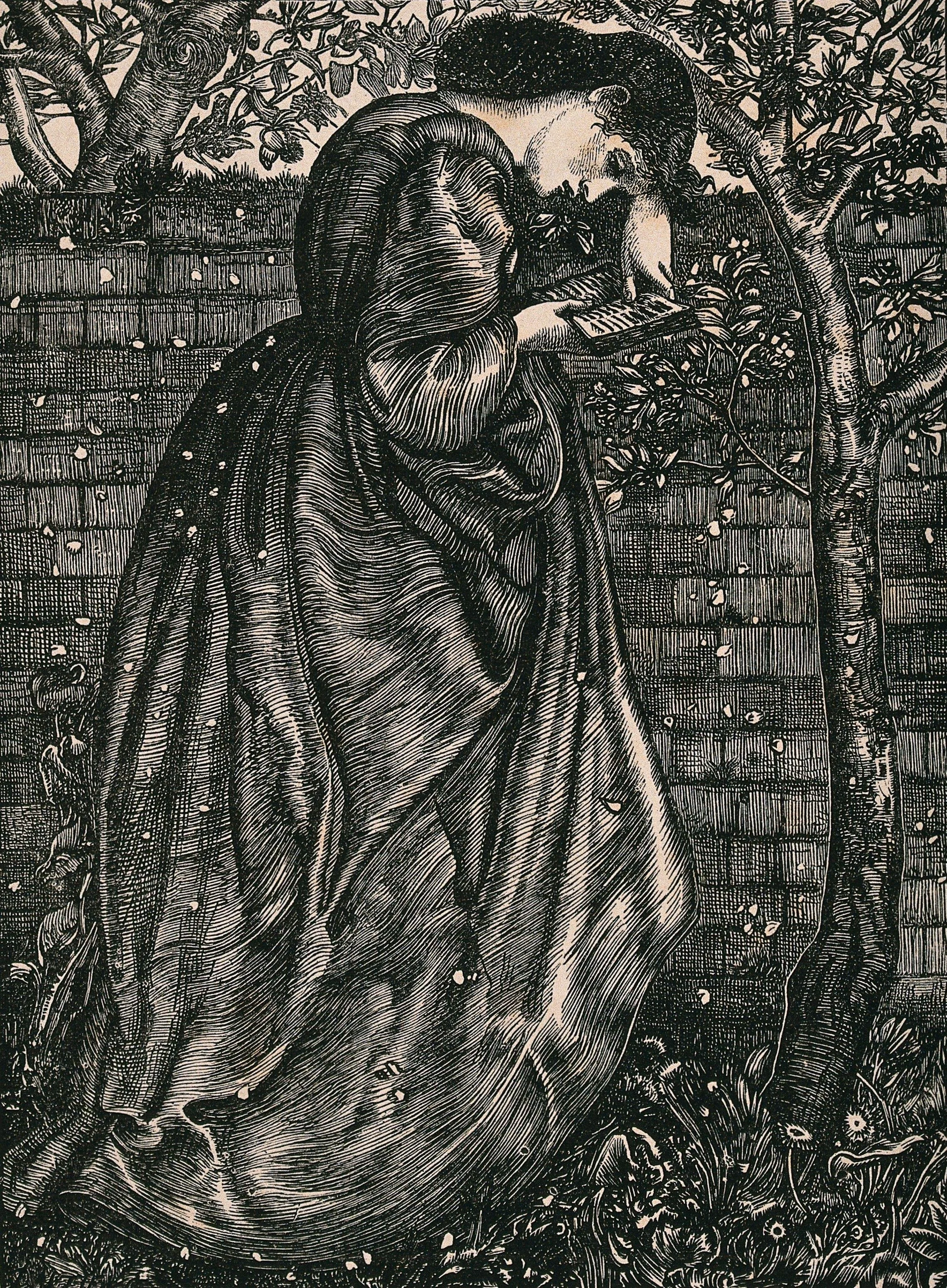
Edward Coley Burne-Jones, Dora Greenwell, and Dalziel Brothers, Young woman leaning against a wall reading a book as snowflakes fall, wood engraving by Dalziel Brothers, 1863, after E. Burne-Jones, Wellcome Collection, https://jstor.org/stable/community.24885859.
Writing Craft Memoirs & Essays
Here’s a short list of some writing craft books I’ve read in the last couple years and loved, with a focus on books that have elements of memoir or that consider the role of writing in an author’s life instead of strictly offering craft advice.
Critical Thinking and Writing Advice
As creatives, we tend to be deeply emotionally invested in our work, and that can derail the critical thinking that we’d bring to advice about other areas of our lives.
If you were to run across advice about weeding your garden that said you should feel deep spontaneous joy while weeding or you might as well give up gardening, you’d write it off as ridiculous, but put a writer in a situation where they run into similar advice, and it can shake their view of their calling.
It doesn’t mean we’re irrational, it just means that sometimes we need reminders to pause and think critically about the advice we’re engaging with.
Consider the source.
Exercise those critical thinking skills! Everyone has a viewpoint, and no one has all the answers, so know who’s speaking and what their deal is before you take it to heart.
Are they representing a certain brand or service? How might that be affecting the advice they’re giving?
What have they published? Have you read it? Was it finished to a level of quality you admire?
What have they done in their life? What experience or training do they bring?
How are they disseminating their work? Does it align with what you want to do?
What’s their background? Did they have advantages that you don’t? Do you have advantages they don’t? How might that affect their perspective? How might it affect your perspective?
What are they claiming? What evidence are they offering to back it up? Is it consistent? Logical?
Remember that they’re only talking about what worked for them.
Regardless of whether they say things like “if you don’t have loads of fun you’re doing it wrong,” or “serious writers write everyday,” or whatever else, it’s still only what worked for them.
More on Rhetorical thinking
Having some grounding in rhetorical thinking makes a huge difference not only in thinking critically about advice, but also in producing more coherent writing. It’s most directly relevant in non-fiction writing, but fiction needs organization, too!
It also helps in parsing any kind of communication you encounter. You can think about what arguments (or claims) a movie poster is making, how product packaging is making an appeal to credibility or to emotion, or use it to think deeply about what writers and speakers of any stripe are saying. Practice on motivational speakers, editorial pieces, reporting, political communication, LinkedIn profiles, blog posts, billboards, and whatever else you come across!
It’s a ticket to deeper engagement with the world of human communication.
For anyone interested in digging deeper into how arguments are constructed and supported, these are both great books to start with.
What’s your favorite writing advice book? Email me at ann@anncooperwrites.com (or use the linked form) and let me know!
For more on writing advice, take a look at my post about lists of writing rules.